The Thrive After Oz Library
Peptide Guides & Co-Therapy
Understand the science, weigh the evidence, and explore what peptide therapy means alongside GLP-1 treatment.
Three perspectives. One library.
Peptide Guide Library
Foundations
The Complete Peptides Guide
Get oriented with peptide science, compound categories, safety comparisons, and provider information.
- Peptide finder
- Compound comparisons
- Safety & providers
Evidence
What the Science Actually Shows
Separate approved therapies from early human research and preclinical claims, with an evidence-tiered guide to the landscape.
- Evidence tiers
- Risks & unknowns
- COA checklist
Muscle preservation
The GLP-1 Muscle-Sparing Protocol
Explore protein, leucine, resistance training, and the limitations of peptide co-therapies during semaglutide or tirzepatide treatment.
- Protein calculator
- Nutrition & training
- Co-therapy considerations
Evidence before enthusiasm
GLP-1 & Peptide Co-Therapy Matrix
A comparison of foundations, medications, and experimental approaches—not a list of approved combinations.
6 approaches
| Approach | Role / goal | Evidence | Key cautions | Read more |
|---|---|---|---|---|
| Protein & resistance training | Lean-mass preservation | Established foundation | Individualize nutrition and training with your care team, especially with kidney disease or frailty. | Muscle-Sparing Protocol |
| Creatine & essential amino acids | Training support; help close dietary gaps | Human evidence for training support; GLP-1-specific data limited | Not peptides or replacements for dietary protein. Discuss kidney function, hydration, and supplement quality. | Muscle-Sparing Protocol |
| CJC-1295 / Ipamorelin | Experimental growth-hormone-axis approach | Limited human evidence; GLP-1 combination benefit unproven | Not FDA-approved for GLP-1 muscle preservation. Glucose, fluid retention, and IGF-1 concerns require clinician review. | Peptide Science Guide |
| BPC-157 / TB-500 | Experimental tissue-recovery research | Predominantly preclinical | Not FDA-approved for human use. Human safety and GLP-1 interaction data are insufficient; research products are not treatment. | Peptide Science Guide |
| Tesamorelin | Visceral-fat reduction in its approved indication | Approved for excess abdominal fat in adults with HIV lipodystrophy | Not approved for general weight loss or GLP-1 co-therapy. Combination benefits and risks need specialist assessment. | Peptide Science Guide |
| Semaglutide / Tirzepatide | Primary medication—not a peptide stack | Strong clinical-trial evidence for labeled indications | Follow the prescribed product’s labeling. Do not combine GLP-1 medications or add research compounds on your own. | GLP-1 Guide |
Evidence for a compound alone does not establish safety or effectiveness alongside a GLP-1. Research-use-only products are not approved medicines; a COA does not make them safe for human use.
The short answer
Not all peptides share the same evidence.
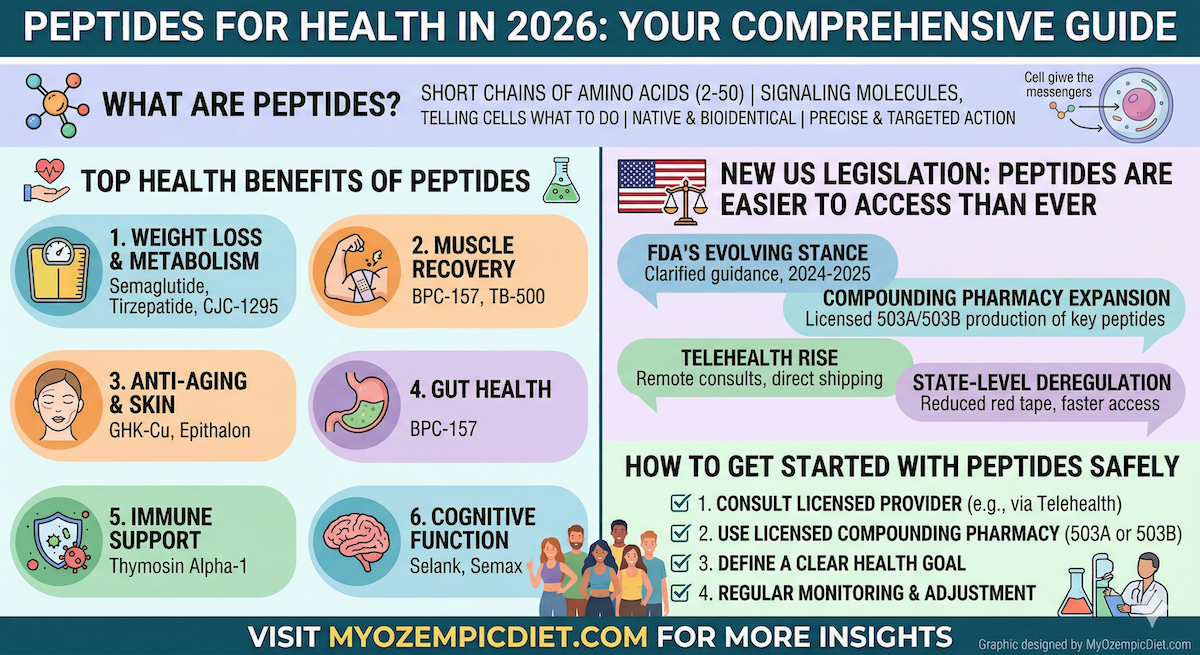
“Peptides” describes a broad family of molecules, not a single treatment. Approved GLP-1 medicines have substantial clinical-trial data; many compounds marketed for recovery or longevity do not. A promising mechanism is not proof of a benefit in people.
- What comes first for muscle preservation?
- Adequate nutrition, resistance training, and clinical monitoring—not an experimental stack. The Muscle-Sparing Protocol covers these foundations.
- How should I judge a peptide claim?
- Ask whether there are human trials for the specific outcome and whether the compound is approved for that use. The Science Guide separates clinical evidence from preclinical research.
Evaluate the treatment pathway as well as the product. Clinical oversight and regulatory status matter more than a purity claim.
Peptide Library FAQ
Educational content only—not medical advice. Consult a licensed healthcare professional before starting, stopping, or combining any medication, peptide, or supplement.
A1C You L8tr! 👋
Get free health strategies to keep weight off after stopping blood sugar and A1C-altering medications. No fluff. No spam.
We respect your privacy. Unsubscribe anytime.